Interesting talks and seminars from my experience at Bangor University.
What Next?
At the beginning of this module I thought that it was a strange thing to get zoology or biology students to do in their third year but through going to so many society talks and seminars I have been able to see what areas I thought would be interesting aren’t for me and have been introduced to other areas which I likely never would have considered.
I cannot say with any certainty where this degree will take me, but I can give an idea of what I would like to do within a year and what areas of research I would be interested in being involved with.
Thanks to my experience at university I have been told about many organisations which I can volunteer with to gain field experience, such as Operation Wallacea and Little Fireface Project. I would like to take part in some sort of hands on work with animals whether that is with one of these organisations or something else (i.e. trying to get work at a zoo). Regardless of whether or not I want to carry on this sort of work after gaining some experience I believe it would be worth it if for no other reason than to gain respect for that sort of work and have some grasp of research from that perspective. This is my goal for the year after I graduate.
Other than hands on experience with animals I would be interested in pursuing a career based around lab work, through practicals at university I have gained transferable skills, I have also gained transferable skills from my dissertation lab work. The dissertation project I am on is looking at the genetic analysis of evolutionary relationships in Asian pit vipers, and from this limited experience in genetics although it has been quite repetitive once I saw the amount of work I had gotten results for, especially considering I ran into some issues, I did have a some sense of achievement.
I have only covered a small fraction of the talks I have been to while at university in this blog, I have been to others which have made me want to learn more about that area, in my second year I attended a seminar on using 3D printing technology to make ‘templates’ for coral reef conservation. Another talk that explained a viable career path for zoology students was given by Dr Stuart Graham on ecological consultancy, and others just from venom day, such as the talk from Ronald Jenner on centipedes.
Overall I can’t say I have any concrete idea on what career I want to pursue once I leave university, but I can say that I have been shown many options and have started to look into careers that I never would have considered if not for the people at Bangor University, both staff and students. I am grateful to the people at Bangor University for allowing me to gain the skills necessary to pursue many different career paths.
Consciousness of the Mind – Animal Minds: Professor Oliver Turnbull
Being able to identify a conscious mind in animals has been the aim of many studies over the years. Possibly the most well-known phrase when considering consciousness in “Cogito ergo sum”, I think, therefore I am, this means that what we perceive our reality to be may be false and that the only thing we can know for certain is that we exist as a “thinking thing”. For example, right now I think that I am writing a blog post about a talk I went to at university (because that’s what my senses are telling me) but there is a good to fair chance that I am in a room in an asylum muttering to myself about animals, venom and canned hunting. To study the consciousness of the mind we first need to define the mind, this is how it was defined during this talk:
- Conscious Experience
- From a first-person perspective
- Being aware
- Positive/Negative (I think this was supposed to mean being able to come to a conclusion – is something positive or negative?)
- Intelligent Thought
- To solve, to seek, to engage in the world
- To generate novel, creative ideas
- Agency (have free will)
There are essentially two problems to studying consciousness, these are:
- The Easy Problem – Which brain regions mediate consciousness?
- The Hard Problem – How do they produce consciousness?
We have some idea for the answer to the easy problem, we have linked certain parts of the brain to certain functions (Cerebrum – performs higher functions such as interpreting touch, vision and hearing, among other things), but we have no real answer to the hard problem.
How do we evaluate the mind of other animals? Seven key components to evaluating the mind were highlighted:
- Language
- Tool Use
- Problem Solving
- Theory of Mind (Have the capacity to attribute mental states (i.e. intents) to oneself and to others)
- Self-Awareness
- Emotion: Neuroscience
- Emotion: Behaviour
One thing that was mentioned during the talk that I think sends an important message was a quote from Jeremy Bentham – “The question is not, “Can they reason?” nor, “Can they talk?” but rather, “Can they suffer?””. Which to me that we should not treat any organism that cannot talk or reason as we please, but we should maintain a level of decency with any organism that can suffer.
While this talk did not give me any specific direction in my future career it did show me how an understanding of zoology can be used in other disciplines, this was a talk given by a neuropsychologist, this joint discipline approach seems to result in very interesting research topics and I am interested in seeing what other disciplines are combined into one research topic.
Zoo Soc Talk – Cuddle Me, Kill Me: Richard Peirce
Richard Peirce is a well-known wildlife conservationist, writer, author and broadcaster. He is probably best known for his work on shark conservation.
Before this talk I had heard the name but didn’t know much more than what I had learned from a brief google search when I found that he would be giving a talk at Bangor University, but he immediately grabbed my attention with the words “…as PC as a rhino with an erection…”. During this he talked about his previous work with sharks (Great Whites in British Waters, Nicole, etc.), orcas, some of his other books and an upcoming film “Lions, Bones and Bullets”. Though the main focus of this talk was captive lion breeding and canned hunting (the hunting of animals bred in captivity in a confined area that they cannot escape from) in South Africa. Captive lion breeding is a disturbingly large trade in South Africa, these lions are kept in awful conditions, in some places the lions are practically just skin and bone, nothing like the incredible image that you have when you think of a lion. These lions are essentially just being bred for their bones (which are sold as tiger bones) these bones are dropped into rice wine vats and sold as tiger bone wine which is considered a viable treatment for things such as rheumatism (inflammation and/or joint pain) and impotence.
During this talk Richard Peirce also mentioned that these lions are a source of profit before they are used for their bones. There are, apparently, three stages of profit:
- First Stage – This is when volunteers pay for the chance to raise “orphaned” lions
- Second Stage – This is where visitors can feed the lions. The lions at this stage are older than those at the first stage.
- Third Stage – This is when people walk with lions – The visitors have sticks while walking and the lions have been taught to fear these sticks (by being beaten with them) and this fear of the stick allows the lions to walk “safely” with humans.
In South Africa animals such as lions and rhinos have been re-designated as “farmed” animals.
This talk disgusted me, that people are still using ‘cures’ made from bones and that it has facilitated this huge lion farming trade in South Africa and that the response of the government wasn’t to try and stop this, it was to re-designate these incredible animals as “farmed” animals. Before this talk, I was never interested in considering conservation as my focus but after hearing Richard Peirce’s first-hand account of one of these “farms” I have begun to consider it. While my interests haven’t shifted from genetics or venom research, I feel that being involved in conservation may be a much more fulfilling experience and being able to make a career out of it may not be so bad.
Snakebites in India: John Benjamin Owens
Snake bite is a neglected tropical disease that annually kills between 81,000-138,000 people that live in some of the worlds most disadvantaged subsistence farming (farming to meet the needs of themselves and their families) communities, and leaves 400,000 surviving victims of snake bite with permanent physical disabilities or disfigurements.
This talk focused on the volunteering efforts in Himachal Pradesh organised by the Captive & Field Herpetology group founded by John Benjamin Owens (Founder and Director) and Vishal Santra (Co-Founder and Co-Director). The aim of this organisation is to help build awareness of snake bite as a disease and to educate people to reduce the amount of snakebites. Snake bite in less developed regions is an occupational hazard for agricultural workers in these regions, some species of snake that are found in these areas like to sit in the fields and can bite workers while they are collecting the crop. The big issues with snake bite in less developed regions are a severe lack of education, how you should handle snakes and how snake bites should be treated. The issue with treatment of snake bites is more than just things like misidentification and lack of anti-venom, there are regions in which snake bite is a big problem yet the people there rely on cures based on local beliefs (these do not work). One reason that these cures are still used in regions with poor understanding of snake bite is that these “cures” will be used by people who have received dry bites (this is a bite from a venomous animal in which no venom is released) as a method of self-defence without wasting their venom. The work done by Captive & Field Herpetology helps people learn the necessary skills to handle snakes, this is done by training with the forest department and educating schools and local villages. Captive & Field Herpetology also collect samples and preserve dead specimens for use in research.
This talk both interested and terrified me, while I am interested in venomous animals, how the venom works, and how to treat the bites, I also consider myself to be quite unlucky when it comes to handling animals so volunteering with an organisation that deals with venomous snakes doesn’t seem like a good idea. It was made clear that the people who volunteer with Captive & Field Herpetology are trained in how to handle venomous snakes, and this is something I would be interested in learning, and I hope I will take part in some work like this in the future.
Risky Business – How Venomous Animals Learn to Play: Anna Nekaris – Oxford Brookes University
At an event called venom day held at Bangor University I was able to attend many talks on different aspects of venom, some focused on how venom may explain variation within groups while others focused more on the field work involved with venom such as teaching people in less developed regions how to deal with snake bite.
One of these talks was about how animals learn to play with others using their weapons (things such as horns and venom, etc.) Before getting into how animals learn to play I feel I should explain the uses of animal ‘weapons’ these can be the basis for sexual selection in some species, they can be used to defend their resources or defend against predators, and even as main method for killing their prey.
How do animals learn to play? Animals learn to play through instinct, by being taught to play or observing other individuals exhibiting the behaviour and as part of social interactions among the group.
How will playing benefit these animals? The animals that were being discussed in this talk all rely on their ‘weapons’ for a major part of their lifestyle so learning how to use them is important, by playing they can develop the supporting bones and muscles, this playing also helps these animals to develop motor skills.
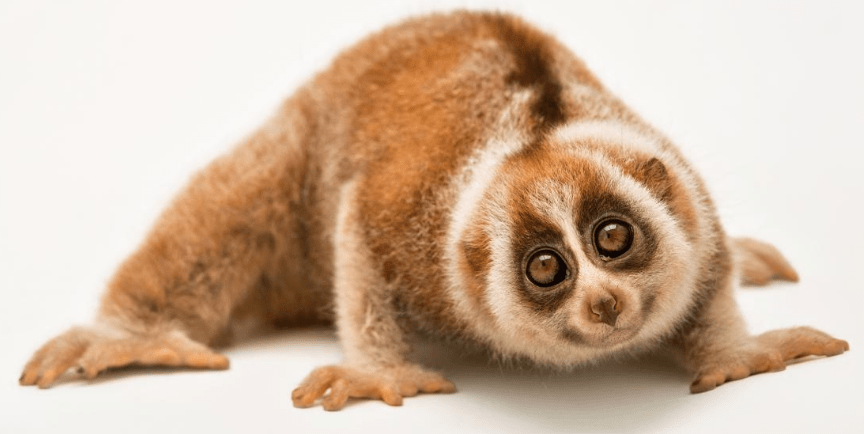
Anna Nekaris is a professor in anthropology and primate conservation, in particular studying the group of primates known as Asian lorises, so this talk was quite focused on slow lorises which are the only known venomous primate. The research that was brought up in this talk has been going on since 2012 in Indonesia, they have been monitoring behaviour, venom secretion, location, size, and number of injuries when they are caught.
It was noted that males and young individuals were more aggressive, and that there was no significant difference in venom secretion between individuals. They observed 454 bouts among 36 known individuals, these bouts lasted between seven minutes and two and a half hours.
This is ongoing research so no conclusion or particularly detailed results were shared during the talk, if you are interested in looking into slow loris behaviour there are ethogram (a catalogue of different behaviours or activity observed in an animal) videos on YouTube from the Little Fireface Project, they also have a website where you can find more information on the research they do. The Little Fireface Project is headed by Professor Anna Nekaris with the aim to “save the slow loris through ecology, education, and empowerment”.
This caused me to re-evaluate a career path I had previously ignored, animal behaviour research. I doubt that it will ever be my main focus but if I am ever given the opportunity to work with a group like Little Fireface Project or to assist with research on a unique animals (such as the slow loris) I would be happy to take part in this research to get hands on experience before making a final decision.
The Development and Future Impact of Biotechnologies for Mineral Processing and Metal Recovery: Professor Barrie Johnson
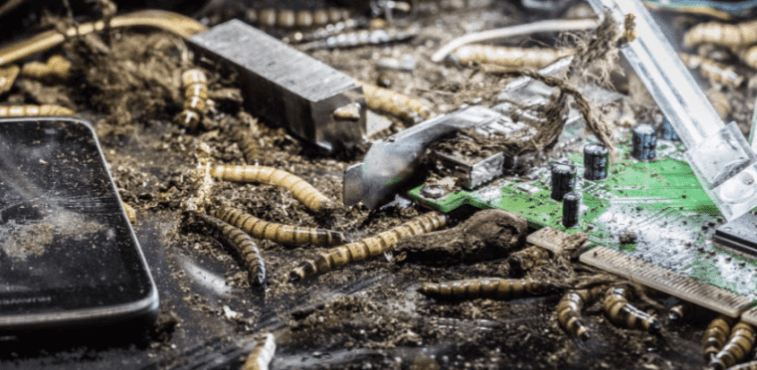
With how much modern-day society relies on technology there is increasing demand for minerals and metals, there is a negative public perception of mining in general, likely due to the negative effects that mining has had on the planet historically. By making use of current biotechnology it is possible to maximise the amount of target minerals and metals that we can get from processing while reducing these negative effects of previous techniques.
The main drive behind the increase in metal usage is the current population growth, since 2000 the world population has gone up by more than 1.5 billion. Another driver behind this increase in metal usage and demand is poorer countries “catching-up”. One statistic that surprised me was that in the last 30 years we have apparently removed as much metal from the ground as we did through the previous millennia.
Biomining may be the answer to these issues, this process involves using specific microbes to extract valuable metals such as iron and copper. Biomining was first discovered in the 1940’s, at this time it was found that bacteria was able to oxidise Fe2+ to Fe3+, since its initial discovery it has been used to extract a lot of metals, even uranium. This process usually takes place between 35°C and 50°C, this means that coolant is required to maintain this temperature, from advances in biomining this technique can now be used to extract multiple target minerals or metals from the same ore.
The benefits of biomining include lower maintenance costs and lower energy requirements compared to the 5-6% of global energy consumption from hauling, milling, and comminution. Another benefit is how versatile the technique is, it can even extract useful metals from rivers that have been polluted (potentially as a result of traditional mining techniques), this can be done while cleaning the body of water. Biomining is a useful process for cleaning the waste left by previous mining operations such as the Sao Domingos mine.
The main drawback of biomining compared to traditional techniques is the speed of the process, biomining can take days, even years, and does not reduce many costs that are associated with mining.
Prior to this talk I had never even considered being involved with research in biotechnology, after this talk I realised how important a field biotechnology has become and that as a result of increasing population and the other factors mentioned it will likely become even more important in the future. While I doubt it will be my aim for my future career, I would be interested in keeping up to date with the research being done in this field to keep an eye out for specific areas of biotechnology that I would be interested in contributing to.
Is Hybridisation a Source of Venom Variation in Rattlesnakes? Dr Wolfgang Wuster
Hybridisation is the process of an animal (or plant) breeding with an individual of another species or variety.
All aspects of their biology is subject to selective pressures, an example of this would be snakes that constrict their prey usually have more vertebrae and shorter muscle segments than related species that do not constrict their prey.
Venoms are complex mixtures of proteins, toxins and any other associated compounds. Among venomous snakes there is a lot of variation in venom composition both between and within species. Rattlesnakes are an excellent model for research into venom variation, they exhibit extensive venom variation (both inter- and intraspecific variation). In Crotalus (a genus of venomous pit vipers known as rattlesnakes – only found in the Americas)venom can be split into two main types:
- “Typical” Type I Venoms (Venom B)
- No neurotoxins (Toxins that are destructive to nerve tissue)
- Low lethality
- More widespread (among rattlesnakes and vipers)
- Rich in SVMPs (snake venom metalloproteinases – these are the primary factors responsible for haemorrhage)
- Type II Venoms (Venom A)
- Rich in neurotoxins
- More than 10 times as lethal as type I venoms
- Higher concentration of presynaptically neurotoxic, heterodimetric PLA2 toxins (such as Mojave toxin (MTX) and crotoxin)
Both types of venom can be found within the same species, these species show intraspecific variation, in Crotalus simus this variation occurs during ontogeny (the origin and development of an organism, i.e. from fertilisation of the egg to the mature form). In other species such as C. scutulatus and C. horridus this variation is geographic, both types of venom can be seen in different parts of the species distributional range.
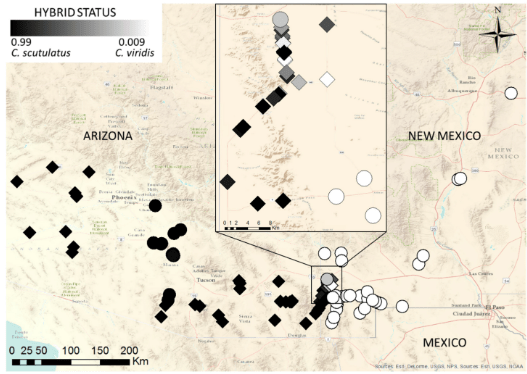
There are many explanations for variation, such as selective pressures, independent losses and hybridisation. It is unlikely that this is a result of convergent evolution, it is also unlikely that this is a result of multiple independent losses of ancestral toxins. It is unlikely to be independent losses because of how many times it would have been lost. Hybridisation was suggested as a likely cause for this because hybridisation occurs in rattlesnakes, these hybrids can be fertile and there is potential for backcrossing (when a hybrid breeds with one of the parent species) and genes can cross this ‘hybrid zone’ if the gene is advantageous and works within the parent species.
Though there is evidence that hybridisation occurs between C. scutulatus and C. viridis and that the presence of MTX varies among the hybrids, there is no evidence that there is any widespread transfer of MTX through the hybrid zone. It was shown that in this sample of rattlesnakes hybrids with both venoms and backcross pairs are only found in the hybrid zone.
As for how this has affected me when thinking about a career in zoology it has once again highlighted how complex an issue venom is. As someone who lives in Liverpool it has made me consider trying to work with/for Liverpool School of Tropical Medicine, more specifically working on the issue of snake bite.
Using Avian Wing Morphology as Inspiration for Aircraft Design: Dr Jorn Cheney
I think it is safe to say that the invention of the plane changed the world and has become an important aspect of modern society (especially in well developed countries). Since they were invented in 1903, they have been improved so much that they are now capable of achieving feats such as breaking the sound barrier (travelling at around 770mph). There is currently a sort of ‘race’ to create more environmentally friendly planes than those that are currently being used. The issue with this is how much it costs; the price of fighter planes is increasing so quickly that soon the U.S. economy will be unable to afford even a single jet.
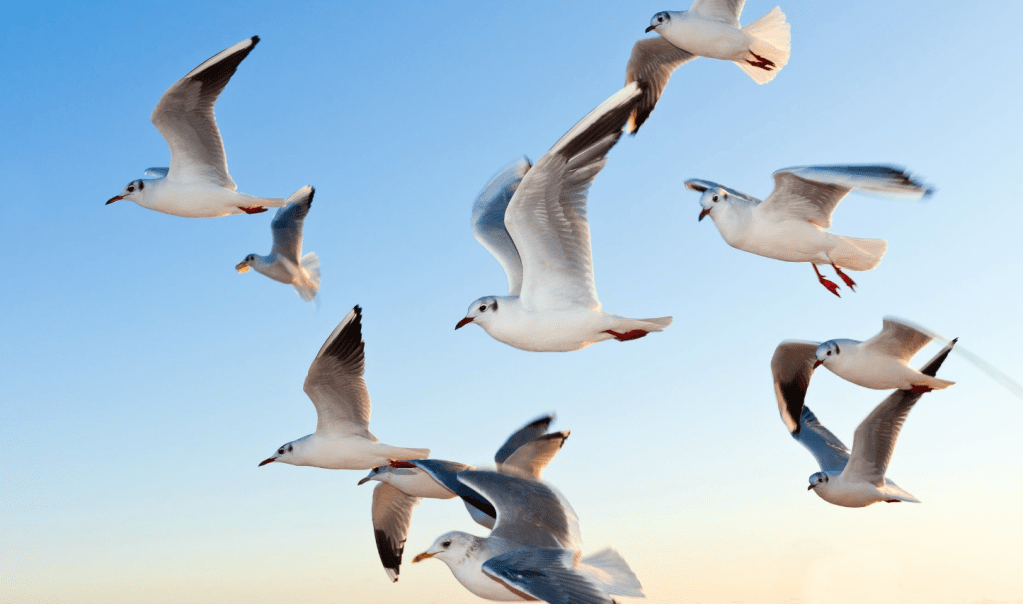
Hopefully by studying avian morphology we can come up with a solution to this problem. If we can reduce drag on aircrafts by even 1%, we could save over $100 million per year. While bird morphology varies greatly between species, they are very well suited to flight through being aerodynamic and remaining stable in the air, the example given for this was a herring gull flying near a cliff. Being able to achieve this kind of flight is something that no current aircraft would be able to manage due to unstable airflow.
By getting three different species of hawk to fly through airborne tracer particles and using slow-motion cameras to capture what was happening, researchers were able to see how the wings were moving and monitor the airflow over the wings. It was found that the ‘tail’ will be used to produce “negative lift” which will allow them to remain stable. It was also found that the shoulder hinge of birds keeps the centre of gravity the same, this means that birds are able to react to changes in the air while remaining aerodynamic.
This shoulder hinge prompted people to examine if it is possible to build a similar hinge mechanism into the wings of drones, and if it is will this cause an increase in the stability of the stability and efficiency of the machine. Unfortunately, this mechanism is not suitable for larger planes, this is due to things such as fluid dynamics and the proportional changes to the forces acting on a larger aircraft compared to smaller ones.
Another observation that was made in this study was that when there were changes in updraft the birds involved exhibited unconscious reactions to this change, which seemed to be due to properties of the muscles and tendons.
This seminar made me think about quite a few different career paths, firstly trying to get involved in research on biomechanics, which has been an interest of mine for some time, but this showed me how useful it can be. It showed me how a greater understanding of how animals can cope with environments that we currently struggle with can help our economy by reducing maintenance cost. It also highlighted just how incredible birds are, that even after all our advancements in technology we still haven’t caught up to something we see every day.
Navigation in Bats: Dr Richard Holland – Bangor University
“Orientation and Navigation in Bats: Magnetic, Celestial or something else?”
Mammals as a group have some difficulty using stimuli to navigate, though this conclusion could be a result of our somewhat limited understanding of navigation in mammals, there are issues with trying to study some species which decreases the amount of viable species for navigation studies.
Bats are a useful species to study when looking at navigation in mammals, it is well known that bats have some capacity to use the information that is processed by their brain to pin-point their current location and to use that information to know what direction they need to go in.
We can analyse how bats navigate by ‘altering’ their senses, this can be achieved by using Helmholtz coils. Helmholtz coils are a device for creating a nearly uniform magnetic field or, are used as scientific apparatus to cancel external magnetic fields, such as the Earth’s magnetic field. It has been noted in some scientific papers that many animals rely on the Earth’s magnetic field for spatial orientation and navigation. The ability to use the Earth’s magnetic field for spatial orientation and navigation has been observed in migratory species of birds, in some species of fish and in bats, just to name a few.
It was found that when homing bats were subjected to an altered magnetic field (by using apparatus such as Helmholtz coils) in view of the sunset (which is a common time for these animals to calibrate this sense) that these bats departed in a direction corresponding with change in magnetic field. To try and find more evidence to support that the findings were due to the altered magnetic field a mirror was used to ‘shift’ the sunset while not changing the magnetic field, these bats showed no response (though it seems likely that migratory bats are making use of this method of calibration).
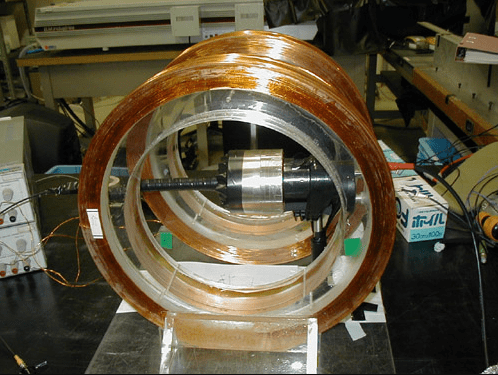
In my opinion the most interesting part of this seminar was the discussion of how animals sense the magnetic field, two hypotheses were covered, the radical pair hypothesis and the magnetic particles hypothesis:
- Radical Pair Hypothesis: This hypothesis is based on the assumption that there is a chemical reaction somewhere in the animals body that is sensitive to magnetic fields (even those as weak as the Earth’s), in particular the direction of the magnetic field resulting in a sort of chemical compass. These reactions are light dependent, and the radical pairs are formed after excitation of the reactant molecules by light (sunlight or even moonlight or stars).
- Magnetic Particles Hypothesis: This hypothesis is based on quantum mechanics, so it is difficult for me to explain.
I found this talk fascinating, the research into how animals make use of the Earth’s magnetic field seems like a topic I would be interested in taking part in in the future, before this seminar I had somewhat given up on going for a career in research outside of lab work (i.e. genetics).
 University Blog - Looking toward a career in Zoology
